
Saturday, January 2, 2016

Tuesday, September 1, 2015
Another Transylvanian church, more embroidery
This church is a few Km away for the church I posted about yesterday.
The Kalotaszeg region of Romania is famous for this "irasos" or "writing" stitch, here blue is the colour.


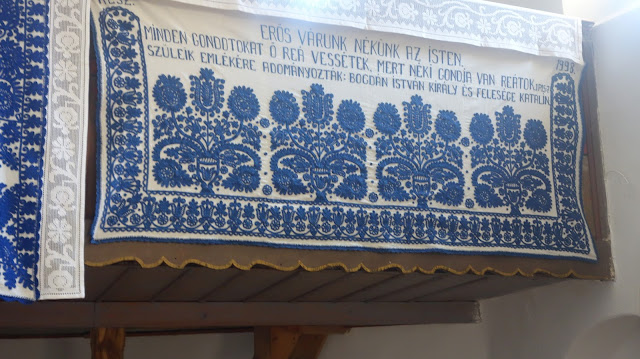


The Kalotaszeg region of Romania is famous for this "irasos" or "writing" stitch, here blue is the colour.


Monday, August 31, 2015
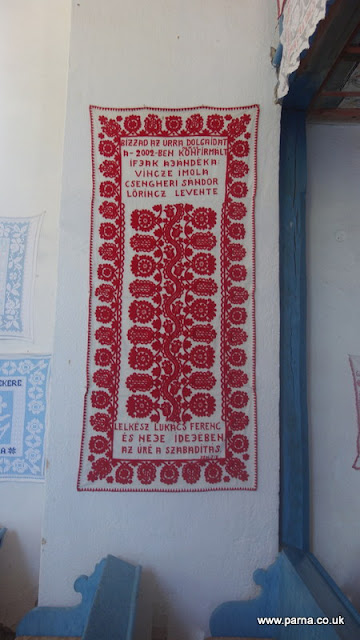
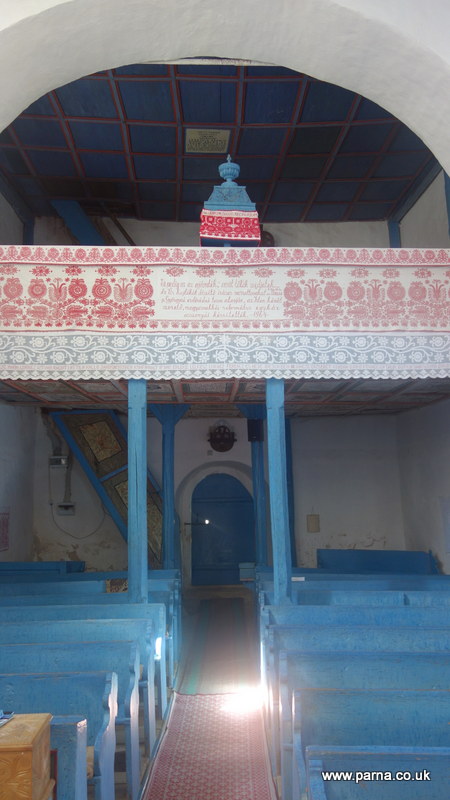
Transylvania, commemerative embroideries
Its been a while since i have posted here. I have just returned from a trip to the Kalotaszeg region of Transylvania, Romania and thught I would share some images of embroideries. First up is a church in the small village of Magyarvalko. A beautiful fortifed church on top of a hill in this tiny village.
For more regular upates follow me on facebook




For more regular upates follow me on facebook




Friday, February 27, 2015


Saturday, November 8, 2014
Hungarian Embroidery Sampler


Its a wonderful piece and a great reference in identifying embroidery.
Monday, October 6, 2014


Monday, September 29, 2014
About Vintage Grain Sacks
Vintage linen grain sacks vary in weight, texture and weave, every piece is slightly different .
Most of our grain sacks date from before 1939, most are significantly older. Our grain sacks were woven in areas of Eastern Europe with a strong peasant culture. Families would grow their own hemp and or linen, harvest it, prepare for spinning and then weave. Hemp and linen was used to make clothes as well as household textiles and sacks and cart covers for use on the small holdings. Stripes and or monograms would indicate to the village mill whose grain was being milled. The most common coloured stripes are red or blue. We source from a small number of villages in transylvania where toffee coloured stripes were woven form thread dyed using walnut kernels. Hering bone weaves are more ommon in Romaina, sometimes thes fabrics are dark and very heavy and generally not as attractive as the fabrics thtat were made in hungary, the Ukraine and some of the Transylvanian villages.


Grain sacks are beautiful textured, versatile fabric. Measurements are for the unopened sacks . The sacks was made of one piece of fabric doubled over and hand stitched at the sides the opening hems. Some sacks have a triangular of rhombode peice of cloth inserted at the opening with which the sacks could be more easily grasped and may have been used as a pouring spout. Each grain sack is double the stated length if opened out.
Our pinterest page shows vintage grain sacks in use for furnishngs


Most of our grain sacks date from before 1939, most are significantly older. Our grain sacks were woven in areas of Eastern Europe with a strong peasant culture. Families would grow their own hemp and or linen, harvest it, prepare for spinning and then weave. Hemp and linen was used to make clothes as well as household textiles and sacks and cart covers for use on the small holdings. Stripes and or monograms would indicate to the village mill whose grain was being milled. The most common coloured stripes are red or blue. We source from a small number of villages in transylvania where toffee coloured stripes were woven form thread dyed using walnut kernels. Hering bone weaves are more ommon in Romaina, sometimes thes fabrics are dark and very heavy and generally not as attractive as the fabrics thtat were made in hungary, the Ukraine and some of the Transylvanian villages.
Grain sacks are beautiful textured, versatile fabric. Measurements are for the unopened sacks . The sacks was made of one piece of fabric doubled over and hand stitched at the sides the opening hems. Some sacks have a triangular of rhombode peice of cloth inserted at the opening with which the sacks could be more easily grasped and may have been used as a pouring spout. Each grain sack is double the stated length if opened out.
Our pinterest page shows vintage grain sacks in use for furnishngs
Subscribe to:
Posts (Atom)